A Busy Day for the UN in Cyprus
Leaders and Civil Society in Dialogue
NEANEWSHABERLER
1/28/20261 min read
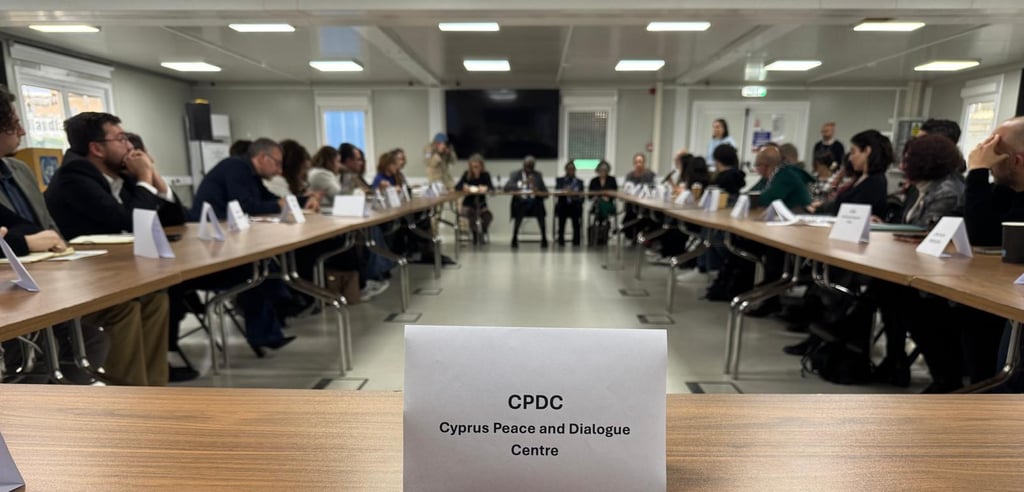
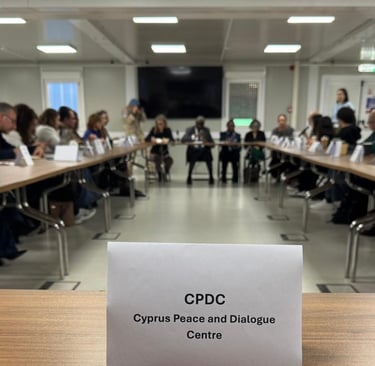
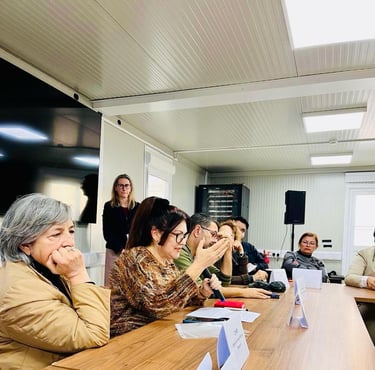
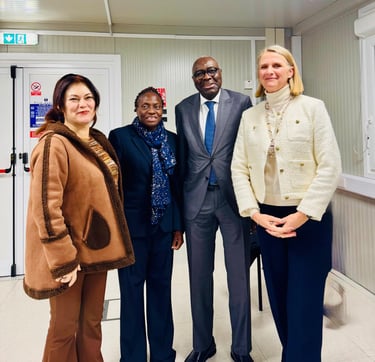
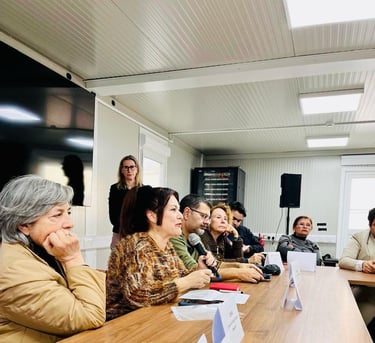
Today while UN Secretary-General’s Personal Envoy, Ms María Ángela Holguín, held meetings with the leaders, Mr Khassim Diagne, Special Representative of the UN Secretary-General in Cyprus and Head of UNFICYP, convened a bicommunal roundtable discussion with civil society organisations at the Ledra Palace Hotel.
The roundtable aimed to introduce the SRSG to civil society across the divide and to establish a channel for direct dialogue, enabling him to hear first-hand the challenges, concerns, and contributions of CSOs engaged in trust-building and peace efforts.
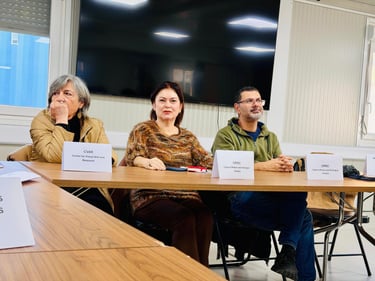
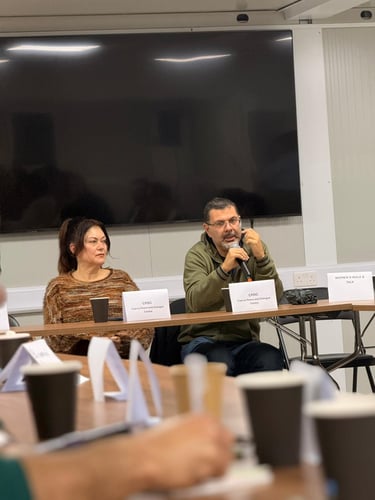
The Cyprus Peace and Dialogue Centre (CPDC) was represented by:
• Meltem Onurkan-Samani, Founding Director
• Charis Psaltis, Founding Coordinator
Speaking on behalf of CPDC, Dr Onurkan-Samani underlined that the key challenges facing the Cyprus peace effort today are not primarily about the substance of a settlement, but about how the peace process itself is designed, structured, and implemented.
She emphasised that the long-standing absence of credible, systematic, and continuous civic engagement has contributed to repeated failures, missed opportunities, and deep public mistrust. Although research consistently shows that people in both communities continue to support a federal solution, many no longer believe that an elite-driven process design can deliver it. This growing gap between public preference and public trust was highlighted as one of the most serious obstacles to sustainability.
CPDC shared its ongoing work on developing an updated peace process methodology, grounded in the principle that inclusivity requires method. This includes the use of deliberative tools such as citizens’ or civic assemblies—leader-mandated and advisory mechanisms that allow a representative cross-section of society to deliberate away from party politics and media polarisation, with the aim of supporting leaders in making difficult and sensitive decisions while strengthening legitimacy and public trust.
In this context, CPDC stressed the critical role of the United Nations as an enabler of inclusive process design—particularly in ensuring clear mandate and linkage to the peace process, protection and minimum standards, and continuity and sustainability of civic engagement.
FOLLOW US
Working towards peace.
CONNECT
ENGAGE
cpdc.communication@gmail.com
© 2025. All rights reserved by CPDC.
This website was funded by the European Union. Its contents are the sole responsibility of CPDC and do not necessarily reflect the views of the European Union.
Sakarya Street 7, Nicosia, Köşklüçiftlik, 99010 northern Cyprus