Citizens need information and accountability to engage with the Cyprus Peace Process
C-UP
GREEK HABERHABERLERNEWSNEA
5/29/20263 min read
Any initiative to engage citizens with the Cyprus peace process will need to ensure that participants are provided with objective information and impartial experts; that the assemblies are fully representative and free from political influence; and that the political leaders will be accountable to any proposals put forward. These are the findings of the focus groups conducted in the first phase of the Updated Cyprus Peace Process Design (“C-Up”) project, funded by the European Union under the Aid Programme for the Turkish Cypriot community and led by the Cyprus Peace and Dialogue Center (CPDC) in partnership with the Interdisciplinary Centre for Law, Alternative and Innovative Methods (ICLAIM).
The C-Up project aims to engage citizens in reviewing and updating the way in which negotiations to solve the Cyprus problem are conducted (the process methodology) in order to address structural obstacles and to support the political leaders in making difficult decisions. The aim is not to engage citizens in negotiating the core issues of the Cyprus problem as such, but to engage them in updating how they are conducted. The EU-funded C-Up project involves conducting focus groups in each community to inform seven civic assemblies: four mono-communal assemblies (two in each community), two, ai-assisted, bicommunal assemblies and one in-person bicommunal civic assembly. The C-Up project is timely, given that the move towards the establishment of a consultative body for civil society engagement, as announced by the two leaders on 8 May 2026.
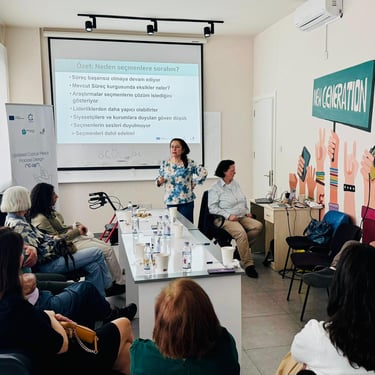
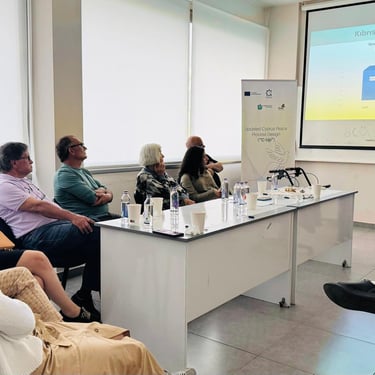
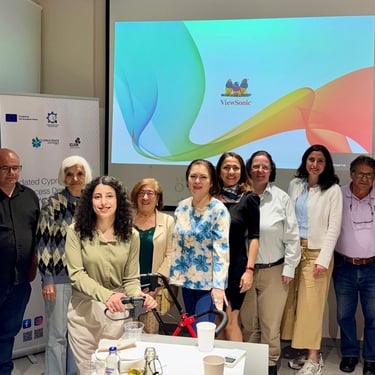
Four mono-communal focus groups have already taken place in both communities—two in the Greek Cypriot and two in the Turkish Cypriot communities. These provided valuable inputs into what citizens would need in any deliberative democracy or civic assembly process while providing insights into the ongoing implementation of the C-Up project.
The project has now moved into its main implementation phase. A representative cross-section of participants will take part in small mono-communal assemblies. Conducted under the internationally accepted principles of “deliberate democracy”, participants will be given the time, space and information to deliberate on core “process design” questions: about how the negotiations have been conducted to date and how they might be updated to increase the chances of the leaders reaching a successful conclusion.
Following the mono-communal assemblies and ai-assisted bicommunal assemblies, the project will convene an in-person bicommunal pilot assembly, which will consolidate findings and test the full deliberative model. All activities follow clear rules: inclusive participation, respect for differing viewpoints, privacy protection, and evidence-based discussion.
Each stage of the project informs the next. Across the focus groups, four common themes emerged:
● Desire for objective information. A strong theme across all focus groups was a request for clear and unbiased information about previous rounds of negotiations, the history of negotiations and how they are conducted (the current methodology or process design). Some requested that the minutes and documents of previous negotiations should be published.
● Desire for broad representation that is free from political influence. Participants felt strongly about the need for civic assemblies or other deliberative democracy processes to represent a true cross-section of society and for them to be designed in such a way that the participants are protected from political influence.
● Desire for political accountability and leader follow-up. Another frequent request was political accountability: to ensure that proposals made by citizens were followed up by the political leaders.
● Desire for impartial experts. Participants desired impartial experts for any deliberative democracy exercise and some presented ideas to ensure that the experts would be truly independent. .
If you would like to take part in the next phase of our project, please get in touch.
Project Scope
C-Up focuses exclusively on process design—the rules, structure, incentives, and procedures that shape how negotiations are conducted. Previous negotiation rounds have typically involved small groups of political leaders meeting behind closed doors, with limited public engagement and recurring breakdowns. Based on comparative research, the project’s aim is to resolve/reconcile structural features of the negotiation process that have contributed to repeated failures in Cyprus Problem.


FOLLOW US
Working towards peace.
CONNECT
ENGAGE
cpdc.communication@gmail.com
© 2025. All rights reserved by CPDC.
This website was funded by the European Union. Its contents are the sole responsibility of CPDC and do not necessarily reflect the views of the European Union.
Sakarya Street 7, Nicosia, Köşklüçiftlik, 99010 northern Cyprus