New Consultative Model to Update the Cyprus Peace Process
NEANEWSHABERLER
1/29/20262 min read
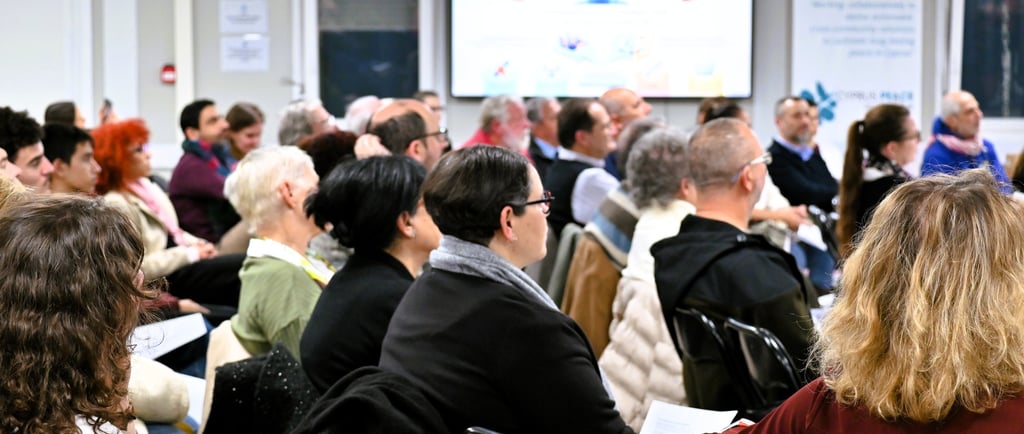
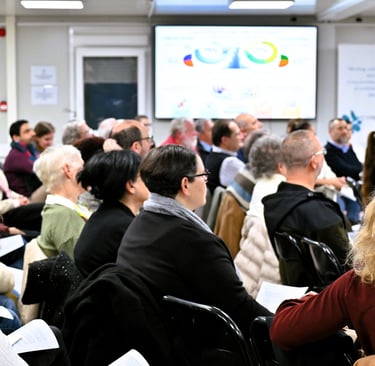
A group of distinguished academic and policy experts, working under the auspices of the Cyprus Peace and Dialogue Center (CPDC), have proposed a new consultative model aimed at updating the design of the Cyprus peace process, with a stronger focus on inclusivity, credibility, and results-oriented.
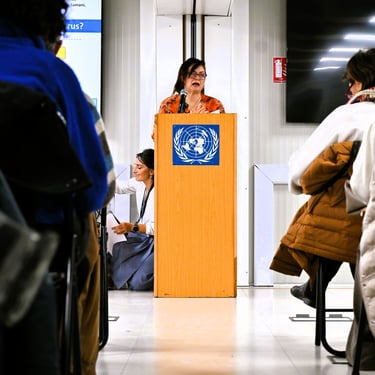
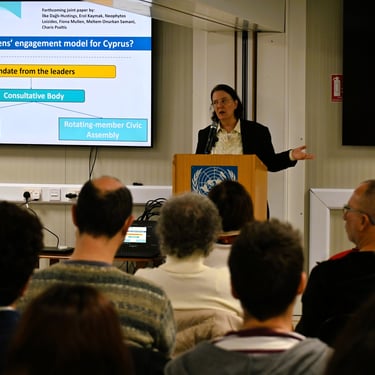
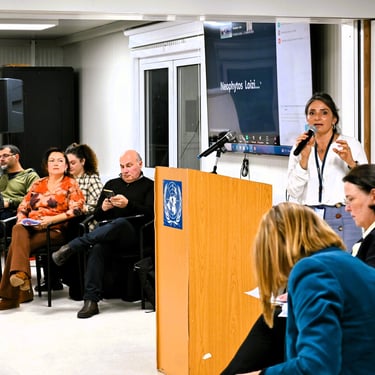
The proposal was presented at a public networking and awareness event hosted by UNFICYP at Ledra Palace, which brought together researchers, practitioners, civil society actors, and members of the public to discuss how peace process methodology itself can be strengthened.
While substantial convergence has been achieved over the years on the content of a potential settlement, the experts involved in this initiative highlighted that the main obstacle to progress lies in the structure and methodology of the process itself. In particular, citizens repeatedly express concerns about ownership, credibility, accountability, and what happens when negotiations stall or collapse.
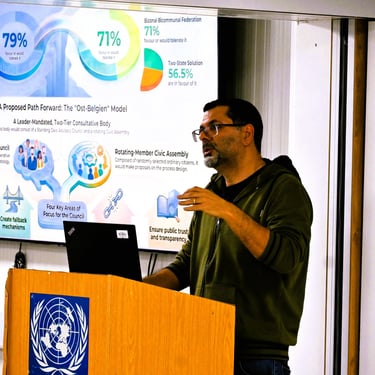
Drawing on comparative international experience—including the Ost-Belgien model—and building on the leaders’ July 2025 common understanding on the need for a consultative body for civil society engagement, the experts propose a leader-mandated, two-tier Consultative Body.
The proposed structure consists of:
• a Standing Civic Advisory Council, responsible for managing and overseeing a structured deliberative process, and
• a Rotating Civic Assembly, composed of randomly selected citizens representing a broad cross-section of society, tasked with developing proposals to update and enhance the design of the negotiations process.
The focus of the proposed model is not on negotiating settlement substance, but on process design—specifically how to ensure that negotiations are inclusive, trusted by the public, resilient to deadlock, and oriented toward tangible outcomes.
The Consultative Body would be mandated to deliberate on four key areas:
1. Deliberative civic engagement, including how to design a leader-mandated, inclusive process tailored to Cyprus’ specific context;
2. Fallback or backstop mechanisms, aimed at incentivising engagement and sustaining momentum;
3. Deadlock-breaking mechanisms, to address obstacles during negotiations through pre-agreed procedures; and
4. Transparency and public trust, ensuring that citizens are informed and able to engage meaningfully throughout the process.
The proposal builds on practical experience. In 2025, deliberative approaches were piloted with the support of UNDP, and preparations are now underway—together with European Union support—to pilot a bicommunal citizens’ assembly focused specifically on peace process methodology.
Commenting on the initiative, Meltem Onurkan-Samani, Founder of CPDC, noted that the leaders’ common understanding presents “a significant opportunity to enhance the peace process in a way that supports difficult political decision-making, by increasing transparency, engaging citizens meaningfully, and strengthening the overall credibility of the process.”
Further elaboration of the proposed model will follow in a forthcoming paper, alongside continued engagement with stakeholders across both communities.
FOLLOW US
Working towards peace.
CONNECT
ENGAGE
cpdc.communication@gmail.com
© 2025. All rights reserved by CPDC.
This website was funded by the European Union. Its contents are the sole responsibility of CPDC and do not necessarily reflect the views of the European Union.
Sakarya Street 7, Nicosia, Köşklüçiftlik, 99010 northern Cyprus